Viktor Frankl Quotes❓
Founder of Logotherapy.

Logotherapy or meaning therapy is uniquely designed to meet the spiritual and existential needs of the aging population. In the areas of aging and spiritual care, self-transcendence is a central issue. As our capacities decline with advancing age, and as our familiar world recedes because of disabilities and chronic illness, our spiritual capacity to transcend our physical limitations becomes a promising source of well-being. Research has clearly shown that self-transcendence has become an important topic for spiritual care, especially for the very old.—Viktor Frankl
[The] ultimate meaning [of life] necessarily exceeds and surpasses the finite intellectual capacities of man; in logotherapy, we speak in this context of a super-meaning. What is demanded of man is not, as some existential philosophers teach, to endure the meaninglessness of life, but rather to bear his incapacity to grasp its unconditinal meaningfulnesss in rational terms. Logos is deeper than logic.—Viktor Frankl
A man who becomes conscious of the responsibility he bears toward a human being who affectionately waits for him, or to an unfinished work, will never be able to throw away his life. He knows the ‘why’ for his existence, and will be able to bear almost any ‘how’.—Viktor Frankl
By declaring that man is responsible and must actualize the potential meaning of his life, I wish to stress that the true meaning of life is to be discovered in the world rather than within man or his own psyche, as though it were a closed system. I have termed this constitutive characteristic ‘the self-transcendence of human existence’. It denotes the fact that being human always points, and is directed, to something or someone, other than oneself—be it a meaning to fulfill or another human being to encounter. The more one forgets himself—by giving himself to a cause to serve or another person to love—the more human he is and the more he actualizes himself. What is called self-actualization is not an attainable aim at all, for the simple reason that the more one would strive for it, the more he would miss it. In other words, self-actualization is possible only as a side-effect of self-transcendence.—Viktor Fankle
Existential frustration is in itself neither pathological nor pathogenic. A man’s concern, even his despair, over the worthwhileness of life is an existential distress but by no means a mental disease. It may well be that interpreting the first in terms of the latter motivates a doctor to bury his patient’s existential despair under a heap of tranquilizing drugs. It is his task, rather, to pilot the patient through his existential crises of growth and development.—Viktor Frankl
As each situation in life represents a challenge to man and presents a problem for him to solve, the question of the meaning of life may actually be reversed. Ultimately, man should not ask what the meaning of his life is, but rather he must recognize that it is he who is asked. In a word, each man is questioned by life; and he can only answer to life by ‘answering’ for his own life; to life he can only respond by being responsible. Thus, logotherapy sees in responsibleness the very essence of human existence.―Viktor E. Frankl
At this point it would be helpful [to perform] a conceptual turn through 180 degrees, after which the question can no longer be ‘What can I expect from life?’ but can now only be ‘What does life expect of me?’ ‘What task in life is waiting for me?’ Now we also understand how, in the final analysis, the question of the meaning of life is not asked in the right way, if asked in the way it is generally asked: it is not we who are permitted to ask about the meaning of life—it is life that asks the questions, directs questions at us… We are the ones who must answer, must give answers to the constant, hourly question of life, to the essential ‘life questions’. Living itself means nothing other than being questioned; our whole act of being is nothing more than responding to—of being responsible toward—life. With this mental standpoint nothing can scare us anymore, no future, no apparent lack of a future. Because now the present is everything as it holds the eternally new question of life for us.—Viktor Frankl
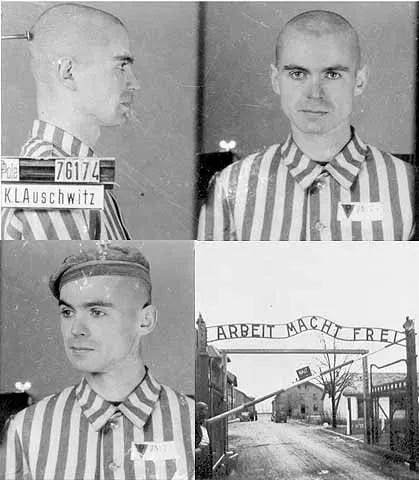
But what about human liberty? Is there no spiritual freedom in regard to behavior and reaction to any given surroundings? …Most important, do the prisoners’ reactions to the singular world of the concentration camp prove that man cannot escape the influences of his surroundings? Does man have no choice of action in the face of such circumstances? We can answer these questions from experience as well as on principle. The experiences of camp life show that man does have a choice of action. … Man can preserve a vestige of spiritual freedom, of independence of mind, even in such terrible conditions of psychic and physical stress. Everything can be taken from a man but one thing: the last of the human freedoms—to choose one’s attitude in any given set of circumstances, to choose one’s own way.—Viktor Frankl
It is well known that humor, more than anything else in the human make-up, can afford an aloofness and an ability to rise above any situation, even if only for a few seconds. …The attempt to develop a sense of humor and to see things in a humorous light is some kind of a trick learned while mastering the art of living. Yet it is possible to practice the art of living even in a concentration camp, although suffering is omnipresent.—Viktor E. Frankl
Sigmund Freud once asserted, ‘Let one attempt to expose a number of the most diverse people uniformly to hunger. With the increase of the imperative urge of hunger all individual differences will blur, and in their stead will appear the uniform expression of the one unstilled urge’. Thank heaven, Sigmund Freud was spared knowing the concentration camps from the inside. His subjects lay on a couch designed in the plush style of Victorian culture, not in the filth of Auschwitz. There, the ‘individual differences’ did not ‘blur’ but, on the contrary, people became more different; people unmasked themselves, both the swine and the saints.—Viktor E. Frankl
This emphasis on responsibleness is reflected in the categorical imperative of logotherapy, which is: ‘Live as if you were living already for the second time and as if you had acted the first time as wrongly as you are about to act now!’—Viktor E. Frankl